
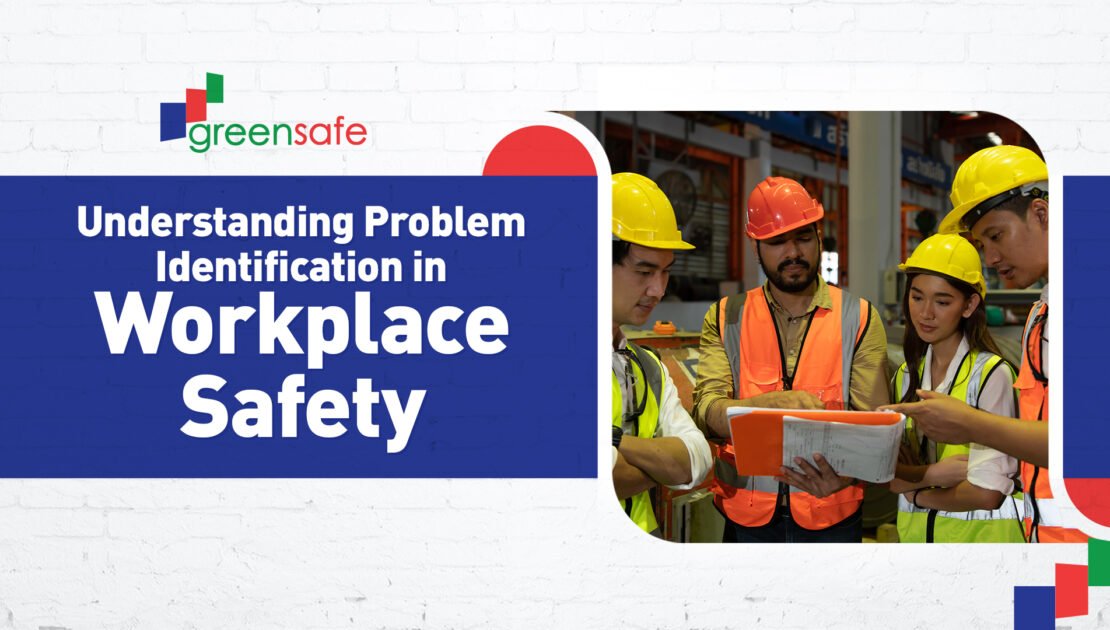
Problem Identification in Workplace Safety is a critical process that helps organizations detect hazards early, assess risks and implement preventive measures. By identifying both visible and hidden risks, businesses can reduce accidents and improve overall safety performance.
In safety management, problem identification is more than observing visible hazards. It also entails observation of hazardous operations, process inefficiency, equipment breakages and environmental considerations that may almost inevitably impact on workers. This is one of the skills that are vital to a safety coordinator, because they usually pay attention to the everyday activities and prevent accidents before they happen.
The Role of Early Hazard Recognition
One of the major reasons why problem identification is paramount in safety management is the fact that most workplace accidents are the result of hazards that were not identified.
According to safety authorities, the root causes of workplace injuries and illnesses often include:
- Failure to identify hazards
- An inability to anticipate risks in the work environment
By early identification of hazards, the organizations can take preventive measures which include:
- Improved training
- Engineering controls
- Updated safety procedures
This is a preventive strategy that will greatly decrease the risks of accidents.
For example: When a safety professional recognizes repeated near-miss incidents involving a piece of machinery, proper problem identification allows them to investigate further. The issue may arise due to:
- Inadequate training
- Poor equipment maintenance
- Flawed workflow design
Addressing the root cause prevents future occurrences rather than simply reacting after an injury has already occurred.
Supporting Proactive Safety Management
Traditional safety management often tends to be reactive to incidents that have already occurred. However, contemporary workplace safety and health strategies focus on:
- Prevention
- Constant improvement
A structured approach in identifying hazards encourage organizations to:
- Actively search for risks
- Prevent accidents at the initial stage
Active identification of hazards helps businesses to adapt to changes, including:
- New technology
- New processes
- Shifting workforce dynamics
Safety professionals trained in Problem Identification Level 3 have the ability to:
- Evaluate complex environments
- Identify risks that others may be unaware of.
This proactive mindset ensures that safety management systems can be efficient even as circumstances in the workplace change.
Improving Decision-Making and Root Cause Analysis
Another significant benefit of strong problem identification skills depends on making strong decisions:
When professionals identify the core problem accurately, they can:
- Develop solutions to address the root cause
- Avoid treating only specific problems
Misidentifying a problem often leads to ineffective solutions.
For example:
- If an organization predicts worker negligence causes frequent accidents, they can implement additional training.
- Nevertheless, when the actual problem lies in bad equipment or bad ergonomic layout, there will be no solution to the problem through training alone.
A well-trained safety professional can:
- Conduct thorough investigations
- Collect relevant data
- Determine the underlying causes of safety incidents
Courses like Problem Identification Level 3 emphasize:
- Analytical thinking
- Evaluating multiple factors before making decisions
Strengthening Safety Culture
A strong safety culture depends on the ability of employees and leaders to:
- Recognize potential hazards
- Communicate them effectively
When problem identification becomes a shared responsibility, workers are more likely to:
- Report risks
- Take active participation in safety initiatives
Safety leaders play a predominant role to promote this culture.
A safety coordinator who acquires strong analytical skills can:
- Encourage workers to share their observations
- Collaborate on safety improvements
Open communication about safety concerns helps organizations to:
- Identify patterns of risk
- Implement meaningful improvements
Over time, this approach:
- Builds trust among employees
- Reinforces the organization’s dedication towards providing security to its employees.
Enhancing Operational Efficiency
Although workplace safety primarily focuses on protecting employees, effective problem identification also improves operational efficiency.
Identifying issues early helps prevent:
- Equipment failures
- Process interruptions
- Costly incidents
Examples include:
- Identifying hazards in equipment maintenance schedules to prevent unexpected breakdowns
- Recognizing workflow bottlenecks to reduce errors and improve productivity
Professionals trained through Problem Identification Level 3 learn to:
- Analyze operational processes from both safety and efficiency perspectives
This dual focus allows organizations to:
- Improve safety
- Maintain productivity
The Importance of Professional Training
While some individuals naturally develop strong analytical abilities, structured training significantly enhances problem identification skills.
Safety professionals benefit from learning systematic methods for:
- Identifying hazards
- Examine risk
- Implement preventive measures
Greensafe International provides safety professionals with courses that teach them practical skills for identifying hazards in the workplace.
These safety courses equip learners with:
- Real-world scenarios
- Risk assessment methods
- Tools for conducting safety investigations
Such training ensures that professionals:
- Understand safety regulations
- Possess the analytical capabilities needed to apply them in complex work environments
Final Thought
To conclude, for safety professionals, particularly, when coordinating safety efforts, excellent analytical and observational skills are a requirement. Professionals can acquire knowledge to identify risks at very early stages, conduct a root cause analysis and use proactive safety techniques, through training courses like Problem Identification Level 3. Additionally, investing in this course is beneficial, as it helps to safeguard the workers, besides enhancing organizational resilience.
Ready to level up your safety strategy? Contact Greensafe International and transform the reactive approach to problem-solving into safety leadership.
