
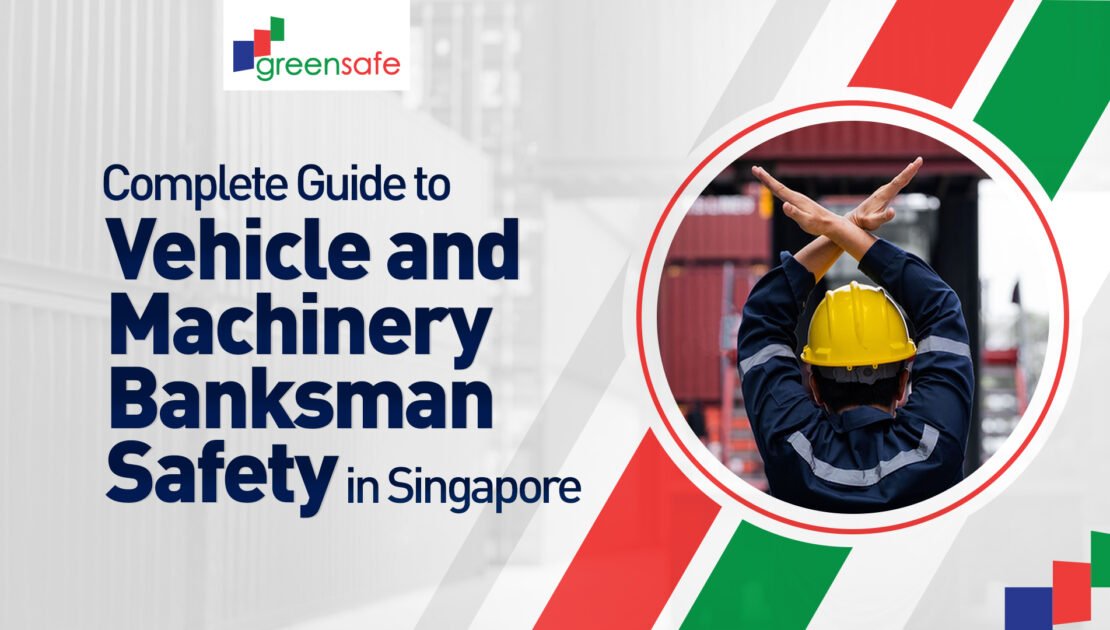
Workplace safety is a primary concern in Singapore, especially for industries that utilize heavy vehicles and machinery. The movement of equipment creates major safety hazards which exist at both construction sites and logistics hubs. This is where the role of vehicle and machinery banksmen safety is important, particularly in averting accidents and ensuring smooth operations.
This blog will help you learn more about banksman safety, course requirements, and the benefits that are important for workplace compliance and safety.
Who is a Banksman?
A banksman’s role is to provide safety by signaling the movement of equipment in limited-visibility workplaces. They act as “eyes on the ground” to assist operators in driving safely through confined areas and blind spots.
Blind spots are common with heavy machinery equipment like cranes, forklifts, and excavators because of the size of the equipment. If banksmen are not used to assist with the movement of vehicles or equipment, it can lead to a serious accident. Banksmen ensure that vehicles and equipment are moved safely by using standardized hand signals or verbal communication.
Importance of Vehicle and Machinery Banksmen Safety
The safety of vehicle and machinery banksman is fundamental in risky areas since any slight miscommunication may result in injury, loss of life, or loss of economics. The following are the main reasons why the safety of banksmen is so crucial:
- Reduces incidents involving reversing vehicles and operating heavy machinery
- Enhances communication between ground workers and operators
- Increases awareness of the changing dynamics of the work environment
- Ensures compliance with Singapore’s Workplace Safety and Health Act (WSH) Act and Regulations
In Singapore, there are regulations specifying the qualifications and training required for workers who operate or direct machinery operations. Therefore, an organization must provide adequate training and certification for banksmen directing vehicles.
What is a Vehicle and Machinery Banksman Safety Course?
The Banksman course is an organized course that aims to give the course participants the knowledge and skills to operate vehicles and machinery safely.
The course normally has a time frame of approximately 4 hours with theoretical and practical aspects.
Key Learning Outcomes
Participants in a vehicle and machinery banksmen safety course will learn:
- Roles and responsibilities of a banksman
- Identification of workplace hazards and risks
- Understanding machinery blind spots
- Standardized hand and arm signaling techniques
- Safe work practices and communication methods
- Use of Personal Protective Equipment (PPE)
By the end of the course, participants are expected to guide vehicles safely into designated areas using proper signaling techniques.
Who is Eligible to Take This Course?
The vehicle and machinery banksmen safety course is also appropriate to various professionals, including:
- Construction and road workers
- Equipment operators and drivers
- Supervisors and site managers
- Safety officers and coordinators
- Logistics and warehouse personnel
Anyone involved in directing or working near moving vehicles and machinery can be beneficial.
Course Structure and Certification
Most banksman courses in Singapore follow a similar structure:
- Duration: Approximately 4 hours
- Assessment: Short written (MCQs) test.
- Certification: Awards on successful completion.
To be certified, the participants are expected to pass an examination, which is used to confirm that they are competent in their banksman’ duties.
Why Choose an Occupational Safety Course?
Upon completion of a course in occupational safety is not only a regulation, but it is also helpful in making the workplace safer and more productive.
The following are the main advantages:
1. Reduced Workplace Accidents
Effective training is also effective in training workers on the risks and safe practices, thereby eliminating incidents to a large extent.
2. Legal Compliance
WSH regulations are very strict in Singapore. By taking an occupational safety course, you can be assured that your organization is up to these standards.
3. Improved Efficiency
When there is good communication between banksmen and the operators, delays and errors are reduced when carrying out the operations.
4. Enhanced Worker Confidence
The trained personnel feel more confident about dealing with real-life scenarios, resulting in improved decision-making at the location.
Role of Training Providers in Singapore
There are several accredited training providers of banksman courses in Singapore. Among the prominent ones is Greensafe International, a well-established training academy that provides workplace safety training, consultations, outsourcing and auditing services.
In addition, they have flexible working schedules, such as evenings, to fit the working professionals. Classes are offered both in the physical classrooms and online, based on availability.
Key Skills Every Banksman Must Have
To perform the tasks efficiently, a banksman has to acquire the following skills:
- Good communication capabilities – It is essential to have clear and accurate signaling.
- Situational awareness – The capacity to scan the environment and foresee dangers.
- Machinery operations knowledge -Knowledge of restrictions and ability.
- Vigilance- Recognising possible risks in a short time.
- Team coordination – Collaboration with operators and supervisors.
The skills are acquired during the course by means of practical training and working in real-life scenarios.
Common Risks in Vehicle and Machinery Operations
Banksman safety courses include risk assessment for the workplace. There are many risks involved, including:
- Blind spots on large machinery
- Vehicles moving backwards in small areas
- Inadequate communication between workers
- Equipment failure
- Unsafe ground conditions
A qualified banksman is critical to alleviating the risks by creating safe coordination and communicating effectively.
Final Thought
To conclude, although Singapore is a safety-conscious society, a well-trained vehicle and machinery banksmen safety is the most important element of accident prevention, and the heart of the matter is the banksmen. Combined with an extensive occupational safety course, it will equip all the personnel with the knowledge and skills they need to ensure accidents are averted and a safety culture is established.
Frequently Asked Questions (FAQs)
1. What is a banksman in Singapore?
A banksman is a trained safety professional responsible for guiding vehicle and machinery movement in workplaces with limited visibility. They use standardized hand signals and communication techniques to prevent accidents.
2. Why is banksman safety important?
Banksman safety is crucial because it helps prevent accidents involving heavy machinery, especially in blind spots and confined areas. It improves communication between operators and ground workers while ensuring compliance with Singapore’s Workplace Safety and Health (WSH) regulations.
3. What is a vehicle and machinery banksman safety course?
A banksman safety course is a short training program designed to teach participants how to safely guide vehicles and machinery. It includes both theoretical knowledge and practical training on signaling, hazard identification, and safe work practices.
4. Who should take a banksman safety course?
This course is suitable for:
- Construction workers
- Equipment operators and drivers
- Supervisors and site managers
- Safety officers
- Logistics and warehouse staff
Anyone working near moving vehicles or machinery can benefit from this training.
5. How long is the banksman safety course in Singapore?
The course typically lasts around 4 hours and includes both theory and practical sessions, followed by a short assessment.
6. Is certification required for banksmen in Singapore?
Yes, proper training and certification are recommended to comply with Singapore’s Workplace Safety and Health regulations and to ensure safe operations at worksites.
7. What skills does a banksman need?
A banksman should have:
- Strong communication skills
- Situational awareness
- Knowledge of machinery operations
- Ability to identify risks quickly
- Team coordination skills
8. What are the common risks in machinery operations?
Common risks include:
- Blind spots in heavy equipment
- Reversing vehicles
- Poor communication
- Equipment failure
- Unsafe ground conditions
A trained banksman helps reduce these risks significantly.
