
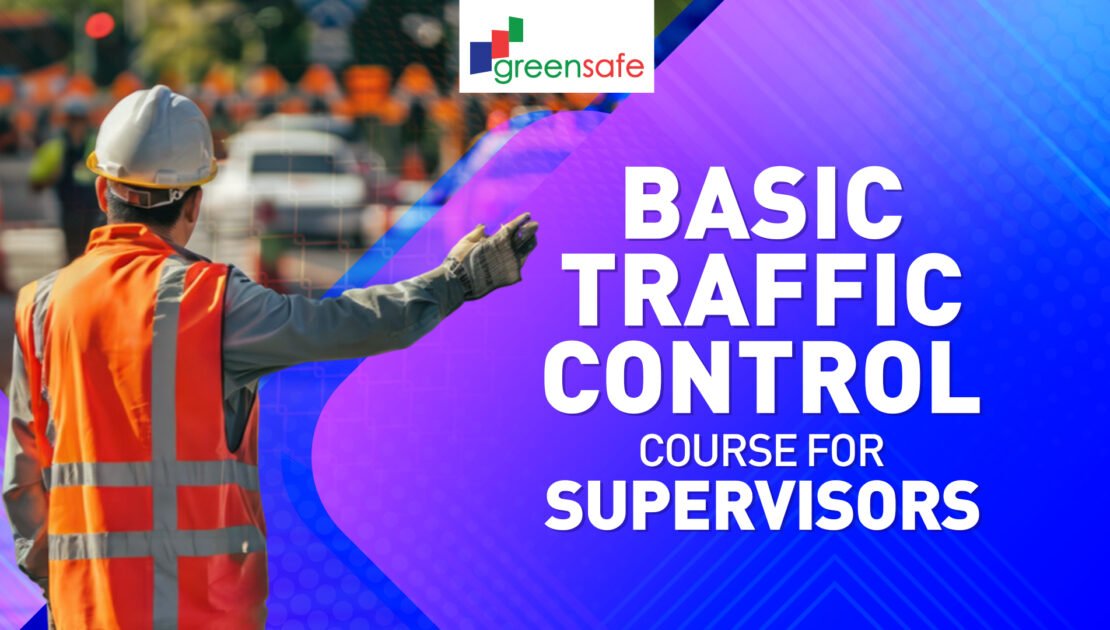
When it comes to traffic control and road safety in high-risk areas such as roadworks, construction sites, and logistics centers, more than just a basic understanding is required – it takes leadership, accuracy, and compliance. This is where a Basic Traffic Control Supervisor Course offers individuals an additional skill set that will enhance their employment potential and allow them to be promoted more quickly.
In Singapore, structured courses are available that comply with strict regulatory requirements set by authorities like the Land Transport Authority (LTA) and the Ministry of Manpower (MOM). One such course is provided by Greensafe International, and it focuses on developing both practical and theoretical skills that can then be used in real-life situations.
What is a Basic Traffic Control Supervisor Course?
- A basic traffic control supervisor course has been developed to provide training for individuals placed in a position of supervision related to traffic control activities at work sites.
- It provides trainees with the ability to manage teams and ensure they are working within compliance with safety regulations, as well as maintain a continuous flow of vehicular traffic through a potentially dangerous worksite.
In addition, the content of the course will support Singapore’s traffic control regulations and will involve managing both safety and operational efficiencies.
Why This Course is Important in Singapore
There are many levels of structured courses in Singapore that are equivalent to an LTA and/or MOM-certified course. One of the reputed safety training providers is Greensafe International. In addition to meeting all regulatory agency requirements from the LTA and MOM, the courses, as we mentioned above, provide both hands-on skills and, in most cases, classroom-based training that can be applied to the real-world environment.
As a result, a growing number of organizations are insisting that supervisors who would like to work in a traffic diversion/control type capacity be certified in an appropriate supervisory course.
Key Learning Outcomes
When participants register for a traffic control course, they will gain:
Traffic Control Planning
- Develop a traffic management plan for your business.
- Maximize the flow of traffic and the layout of the site.
Regulatory Compliance
- Become familiar with the LTA Code of Practice for Traffic Control.
- Understand WorkSafe Safety and Health Act (WSH) legislation and regulations.
Supervisory & Leadership Skills
- Manage traffic control teams effectively.
- Coordinate with site and project stakeholders.
Risk Management & Safety Procedures
- Recognize hazards in roadwork zones.
- Prevent accidents by implementing control measures.
Communication & Emergency Response
- Use on-site communication processes.
- React quickly and effectively when responding to incidents and emergencies.
All of these skills will ensure that your site will be safe and operate smoothly.
Course Structure and Approach
The course is delivered as a combination of theory and practical.
Teaching methods include:
Classes, case studies, scenarios to simulate reality, and hands-on learning.
To master the ability to:
- Supervise personnel working in Traffic Control.
- Implement traffic management devices.
- Maintain safety standards for your entire operation.
A blended learning approach will ensure that participants are prepared to work on the job when they complete their course.
Who Should Enroll?
A supervisor course in Singapore, like the traffic control course, is perfect for:
- Site supervisors responsible for managing construction sites or works zones.
- Project Managers supervising traffic diversion.
- Traffic controllers wanting to advance their careers.
- Safety Officers responsible for compliance with road safety laws.
- Companies wishing to develop and improve their workforce skills
Anyone with previous experience should enroll because many of these courses provide both fundamental knowledge and higher-level skills training.
Importance of a Workplace Traffic Management Plan
The workplace traffic management plan is critical to the successful implementation of traffic control management.
It provides for:
- Ensuring that vehicles and pedestrians can safely move through an area
- Reduces congestion and delays
- Clearly identify road routes and diversions.
- Throughout this course, participants will learn how to:
- Prepare and implement a workplace traffic management plan
- Assess risk and adapt the plan to possible changes
- Ensure compliance with applicable regulatory authority laws
The development of this ability is of considerable value within the industries of construction, logistics, and infrastructure development.
Career Benefits of Completing the Course
- Better employability within the safety/construction industries
- Ability to qualify for supervisory roles associated with traffic management
- Ability to demonstrate competency to work in high-risk areas
- The opportunity to work on large-scale infrastructure and road construction projects
Taking the traffic control supervisor course demonstrates professionalism and safety standards that are important to employers.
Industry Demand and Future Scope
- With the number of urban development projects in Singapore continuing to grow, employers will need trained supervisors.
- With the increase in safety regulations, employers will need to have certified/trained personnel at all worksites.
- Job seekers will need to have proper training and proven ability to lead through certification.
With these three factors combined, taking a supervisor course in Singapore can dramatically improve future job prospects.
Final Thought
To conclude, whether you are an individual seeking greater job advancement or an employer seeking to create a safer working environment, investing in the proper training course can provide amazing benefits. When you find the appropriate training that will teach you the skills needed to set up workplace traffic control plans and properly supervise the traffic operation, you are going to be seen as an asset in the industry.
Frequently Asked Questions (FAQs)
1.What is a basic traffic control supervisor course?
It is a course that teaches individuals how to manage traffic control at a worksite. It covers traffic control planning, safety rules and regulations, identification and minimization of traffic hazards, risk management, communication, maintenance of the smooth flow of traffic, and safeguarding workers and the public.
2.Who should attend a supervisor course in Singapore?
It is perfect for those who have responsibilities in supervisory roles associated with construction projects, road work sites, and logistics sites. These individuals typically take on the supervisory role, but are also responsible for traffic control, compliance, and improving safety on site.
3.Do I need experience to join the supervisor course?
You do not need to have any previous experience to attend a supervisor course. While some basic knowledge of traffic control or safety would be helpful, this course is designed to provide candidates with the basic and advanced level supervisory skill set.
4.What is the difference between the supervisor course and the basic traffic controller course?
- The Basic Traffic Control Supervisor Course deals with traffic control on a job site with the use of signs, signals, and other methods to direct traffic at the work site.
- On the other hand, the Supervisor Course concentrates on the planning of traffic movement at the job site, risk management, and team management.
The traffic control workers are responsible for directing traffic on-site, whereas the supervisor is responsible for planning traffic, compliance control, and safety, which places the supervisor’s position at a higher strategic and management level.
5.How long is the BTCCS valid in Singapore?
In Singapore, there is no specific timeframe for an individual to have a Basic Traffic Control Supervisor Course Certificate. Some employers use a two-year timeframe, after which employees may require refresher training based on the policies of the employer or due to audits and project requirements, because ongoing competency and compliance are necessary to maintain a safe work environment.
