
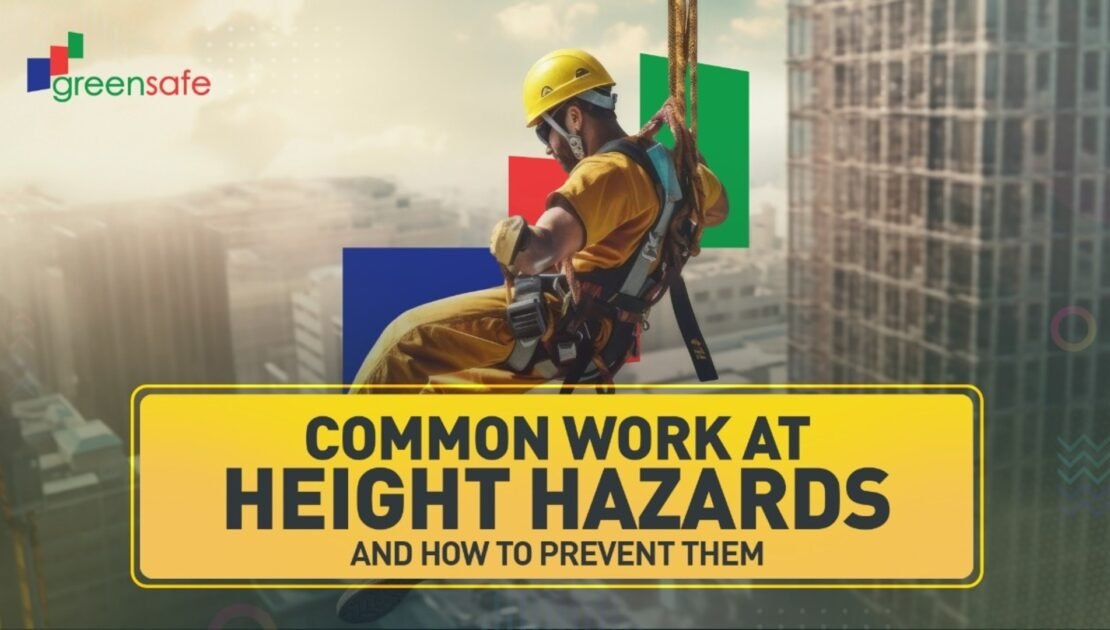
- Falls from ladders, heights, and scaffolds are the leading workplace hazards.
- Work at height hazards require proper training to reduce accidents.
- Fall protection equipment must be monitored regularly and used as required.
- Identify and control hazards with risk assessments before commencing the work.
- Management and worker-level training create safer working conditions.
Working at height is a routine part of several industries – construction, maintenance, telecommunications, and facility management. It is also one of the leading causes of workplace injuries and fatalities, where both workers and employers face serious consequences.
Understanding common work at height hazards is the primary step in creating a safer workplace. With the right training, supervision, and material handling, organizations can significantly reduce the risk of accidents and ensure compliance with workplace safety regulations.
Why Work at Height Safety Matters
When an individual performs work at height tasks, the risk of falls or injuries can be high; Even relatively low elevations can pose serious risks if proper safety measures are not in place.
Employers should effectively identify hazards, assess risks, and implement control measures before the work begins. Workers should also understand their duties and practice safety measures at all times. This ensures that the work environment is strong and safe, not only protecting employees but also enhancing productivity, minimizing legal and financial losses, and reducing downtime.
Common Hazards When Working at Height
1. Falls from Ladders
The most commonly accessed tools in work at height tasks are ladders. Using the ladders often leads to workplace accidents as workers tend to lose their balance if the ladder is damaged or placed on an unstable surface.
Prevention Tips
- Monitor ladders before climbing
- Ensure they are used on firm ground.
- Avoid using phones while climbing high.
- Eliminate lifting heavy objects while climbing up or down.
- Use a proper ladder type and height before performing tasks.
2. Unsafe Scaffolding
Poor maintenance or improper use of erected scaffolding can cause it to become unstable or collapse, leading to falls and injuries.
Prevention Tips
- Ensure scaffolding is erected by trained personnel.
- Install toe boards and guardrails.
- Conduct regular supervisions.
- Avoid overloading scaffold platforms.
- Keep surfaces free from obstructions and debris.
3. Improper or Inadequate Personal Protective Equipment (PPE)
Using damaged equipment or failure to use the correct PPE results in serious injuries, especially when working at height.
Prevention Tips
- Wear the correct personal protective equipment (PPE) with a secure anchorage point.
- Check the harnesses, lanyards, helmets, gloves, non-slip footwear, and connectors before each use.
- Avoid using damaged or expired PPE without any delay.
- Ensure that the workers correctly use, adjust, and maintain the PPE.
4. Unprotected Roof Edges
Workers who perform installation, inspection, or maintenance on roofs face the risks of falling, especially near the edges or fragile surfaces.
Prevention Tips
- Use safety harnesses and lifelines.
- Try installing edge protection systems.
- Mark fragile roof areas clearly.
- Restrict access to authorized personnel.
ALSO CHECK – How to Inspect a Safety Harness Before Working at Height
5. Falling Objects
Tools or construction materials fall from elevated work areas and injure workers working on the ground.
Prevention Tips
- Use secure equipment and tool lanyards.
- Wear protective head coverings.
- Store materials in an appropriate place when not in use.
- Establish exclusion zones below work areas.
6. Weather Conditions
Strong winds, rain, excessive heat, and poor visibility can significantly enhance risks.
Prevention Tips
- Check weather conditions before commencing work.
- Using slip-resistant footwear is preferable.
- Suspend work during poor weather conditions.
- Ensure workers stay hydrated during hot weather.
The Importance of Proper Planning
Many incidents occur when tasks are initiated without adequate preparation. Before any elevated work begins, identifying potential hazards and implementing preventive control measures is crucial for a supervisor.
A thorough work at height risk assessment can help determine the existing hazards, individuals affected, and measures needed to minimize risks. This process should be completed before work begins and reviewed whenever changes occur.
Planning should include:
- Access and egress methods
- Emergency rescue procedures
- Inspection of equipment
- Competency and training needs
- Environmental considerations
Essential Safety Measures for Height Work
Implementing effective working at height safety precautions greatly reduces accidents. Safety measures must follow a protocol prioritizing hazard elimination whenever possible.
Key precautions include:
Using Fall Protection Equipment
Whenever there is a risk of falling, safety measures, anchor points, and lifelines should be used.
Conducting Equipment Inspections
All scaffolds, platforms, ladders, and fall protection equipment must be supervised regularly for damage and wear.
Provide the Right Training
Workers should be able to recognize hazards, use equipment, handle emergencies, and practice safe work before performing elevated tasks.
Maintain an Organized Workplace
Loose tools, materials, or debris usually create trip hazards and enhance the risk of falling objects.
Establish Rescue Procedures
Organizations should have clear rescue plans so that workers can get quick assistance when an incident occurs.
Implementing a Strong Safety Culture
Preventing accidents not only requires inspecting equipment and procedures but also fostering a workplace culture where safety is a priority at every level.
Supervisors should conduct regular safety briefings and educate the workers to report unsafe conditions immediately. This can create a comfort zone for the employees to raise concerns without fear of repercussions.
Regular refresher training and toolbox meetings create high safety awareness. When safety becomes part of daily operations, work at height hazards can be avoided.
How Work at Height Professionals Can Overcome Hazards in Organizations
Training plays a critical role in improving workplace safety and compliance. Organizations looking to strengthen their workforce capabilities can consider the following programs from Greensafe International.
| Course | Overview | Best Suited For |
| WSQ Manage Work at Heights (M-WAH) | Designed for persons planning and overseeing work-at-height activities. Participants of this course can learn to identify hazards, take control measures, conduct risk assessments, and manage work-at-height operations effectively. | • Supervisors
• Safety Coordinators • Project Managers • Team Leaders • Safety Personnels |
| WSQ Perform Work at Height (WAH-W) | Focuses on workers who perform tasks at height. Here, participants gain practical insights into hazard awareness, proper equipment usage, and safe working procedures. | • Construction Workers
• Maintenance Personnel • Technicians • Operators • Individuals Carrying Out Work at Height |
How to Choose the Right Course?
If your roles and responsibilities involve planning, monitoring, or supervising, assessing risk and ensuring compliance, WSQ Manage Work at Heights (MWAH) can be the right choice.
Alternatively, if you are responsible for carrying out tasks directly at elevated locations or surfaces and require practical skills to execute tasks safely, WSQ Perform Work at Height (PWAH) can be the best option.
Together, these two courses support management and frontline workers in the organization in creating a safe approach to working at height safety precautions.
Frequently Asked Questions (FAQs)
- What is work at height?
Work at heights refers to any task where a person could fall from a distance and sustain an injury. - What is the major risk when working at height?
The most common and serious risk is falling from elevated surfaces. - Why does training play a crucial role in work at height hazards?
It helps workers understand the hazards and stick to safe work procedures. - How frequently should fall protection equipment be checked?
Equipment usage must be consistently monitored to ensure compliance with the organization’s procedures. - Who is required to take the work-at-height management course?
This course is designed for supervisors, managers, and safety personnel responsible for planning appnd overseeing work at heights.
