
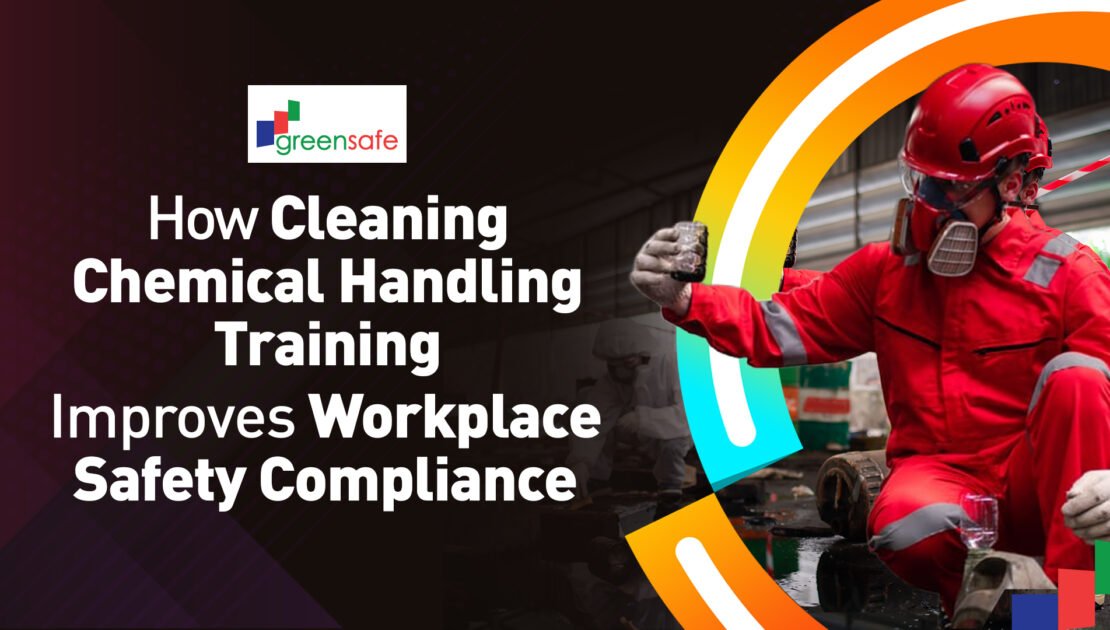
Cleaning chemical handling training is essential for ensuring workplace safety and compliance in industries where hazardous substances are used daily. Proper training helps employees identify risks, handle chemicals safely and prevent accidents.
Understanding the Risks of Cleaning Chemicals
Most people often perceive cleaning chemicals as harmless as they are used on a daily basis. Nevertheless, chemicals possess toxic substances that may cause burns, allergy, breathing complications or other serious ailments in the long term in case of mishandling. Misplaced storage or mixing with chemicals may go as far as toxic fumes or fire.
Employees can unwillingly subject themselves and other people to hazardous conditions with inappropriate leadership. This highlights the need of organized training courses that cannot rely on the fundamental safety guidelines but rather inculcate a safety culture.
The Role of Chemical Handling Training in Compliance
Compliance in the workplace is a key element in safety training as highlighted by regulatory bodies all over the world. On the contrary, the employers in Singapore are supposed to take care of the workers handling chemicals by ensuring that they have been well trained through the known frameworks.
An effective chemical handling training course can assist the organization to comply with these requirements as they can:
- Instruct workers on identifying hazards and evaluating risk.
- Review labeling and interpretation of Safety Data Sheets (SDS)
- Provide examples of how the hazardous materials should be handled, stored and disposed.
- Indicate the need of personal protective equipment (PPE).
Building Competency Through Structured Courses
Training courses like the WSQ Cleaning Chemical Handling (Level 2) provide the necessary knowledge base for employees who are new to the use of cleaning chemicals. Generally, this course introduces methods of ensuring safety (e.g., recognizing chemical hazards] and using protective equipment correctly.
WSQ Cleaning Chemical Handling (Level 3) are suitable for workers or supervisors. This course training covers more complex concepts like the supervision, risk management, development or implementation of safety procedures at an organizational level. This guarantees that safety knowledge is not only learned but also reinforced and applied effectively in real-world scenarios.
Reducing Workplace Incidents and Costs
The short-term gains of chemical handling training include the mitigation of accidents at the workplace. As soon as the workers understand how to operate chemicals, the chances of spills, exposure and injuries are negated to a great deal.
This decrement in the incidences directly affects business with:
Lower medical and compensation costs.
Reduced downtimes and interruptions.
Fewer regulatory penalties
Higher morale and better retention of employees.
In the long run, training is more economical than the results of accidents.
Strengthening Safety Culture
Training is not simply compliance, but a culture of safety being the collective responsibility. When employees have enough confidence and perception of the relevance of safety protocols, they will be more inclined to implement them on a regular basis.
Standardization and relevance of training are guaranteed through courses that are coordinated to a structured workplace safety and health course Singapore. This uniformity assists the organizations in keeping a similar attitude towards safety at all levels.
In addition, employees often become advocates for safety to use the best practices and report any potential risks. Such teamwork enhances the safety culture at the organizational level.
Enhancing Operational Efficiency
Efficient workplaces are safe workplaces. When the employees are adequately trained, the work is done with ease and fewer disruptions arise by errors or accidents.
For instance, understanding the right ratios of diluting chemicals not only is safe but also enhances cleaning and minimizes waste. On the same note, appropriate storage will reduce contamination and increase the shelf life of chemicals.
Such advanced courses like WSQ Cleaning Chemical Handling (Level 3) help supervisors acquire the necessary skills to ease processes and implement safety measures to a higher level. This results in increased coordination and improved productivity across teams.
Meeting Industry Standards and Client Expectations
The current competitive world also requires organizations to observe the high standards of safety expected by their clients and stakeholders. Certified training courses are a great way of demonstrating compliance and this goes a long way in promoting the image and competence of an organization.
Not only will enrolling employees in an approved workplace safety and health course in Singapore guarantee regulatory adherence, but it will also demonstrate a commitment to excellence. Clients are inclined to trust and collaborate with the companies that focus on safety and are willing to invest in the development of their employees.
Training services providers like Greensafe International focus on specific training courses that are based on specific industry requirements; therefore, organizations find it easier to address regulatory requirements as well as the expectations of their clients.
Practical Application of Training
The true value of training lies in its application. Efficient courses incorporate theory with practical application, which enables employees to put what they learn into practice in realistic situations.
Key practical components usually include:
- Demonstrations of proper chemical handling techniques.
- Simulated emergency response exercises.
- The correct use of PPE and safety equipment.
- Real-life case studies of chemical incidents.
By combining these elements, training courses not only enhances the employees’ knowledge but also prepare them to act confidently in any situation
Continuous Improvement and Refresher Training
The process of workplace safety is a continuous one. With the industry regulations, technologies and practices constantly changing, periodic update of training courses by organizations is obligatory.
Refresher courses and superior training sessions help in reinforcing the knowledge and solving the gaps. They also offer a huge prospect of introducing new safety precautions and enhancing the processes.
Companies, which place a lot of emphasis on life-long learning, are more likely to be compliant and adapt to new needs.
Final Thought
To conclude, structured courses such as chemical handling are crucial in competency building and creation of safety culture. These efforts along with the recognized frameworks like workplace safety and health course Singapore gives a strong foundation in the long run.
Ultimately, investing in training is an investment in people, safety and sustainability. Organizations that are more concerned with good chemical handling practices can result in safer work places and better levels of compliance.
