
- The WSH Act promotes safety at work in Singapore through rigorous safety standards.
- Risk assessments, training, incident reporting, and PPE are to be provided by the employer.
- Planned audits and disaster management enhance the compliance of the workplace with WSH regulations.
- No employee is subject to harassment, discrimination, or retaliation.
- Strong safety practices enhance productivity, compliance, and employee welfare.
Singapore is known to most people for its commitment to workers’ protection. Companies have strict rules in place to ensure that everyone on-site, from employees to outside workers and even visitors and guests, is safe when working in the construction or marine industry. It’s not merely a matter of checking off a few boxes; safety regulations here are a reflection of the organization’s strength.
In recent days, workplace accidents have decreased significantly since Singapore tightened its oversight. Guidelines give people a sense of security. The manager of a small organization might be able to see smooth days just because they can keep the operations up to date. The fewer the mishaps in day-to-day operations, the easier it is for those responsible for people management. Expectations aligning with safety roles make safety more effective.
What is Workplace Safety and Health?
It is the systems, practices, and policies that protect workers from injury, illness, and hazards that occur while at work. In Singapore, the main framework of WSH is the Workplace Safety and Health Act (WSH Act), which is administered by MOM.
The overall objective of the WSH Act is to reduce risks in the workplace and to make every person in the workplace responsible for workplace safety, whether they be employers, employees, contractors, or suppliers.
Key Components of Singapore’s Workplace Safety Regulations
Singapore has enacted a broad regulatory regime that covers various industries. There are some of the important elements that organizations need to know:
1. Risk Assessment Requirements
Employers have several important legal duties, including the requirement to carry out appropriate risk assessments. To prevent or reduce the risk from workplace hazards, organizations need to identify the hazards, assess the risk, and take appropriate action to eliminate or reduce the risk.
Risk assessments should be regularly reviewed, especially when:
- New equipment or machinery is introduced
- Work processes change
- Staff are newly recruited
- There is an accident or a near miss that happens
Good documentation is also important, as they can be asked to provide documents in inspections or investigations.
2. Employee Training and Competency
The employer in Singapore is responsible for providing adequate safety training to the workers relevant to their jobs. Safety courses educate employees about hazards and emergency procedures and how to work safely.
Certain industries require particular certificates to be earned prior to getting onto the job site, such as construction and manufacturing. Often, these are conducted through safety orientation courses, refresher training, and toolbox meetings.
A valuable training provider can offer the business safety training, consultancy, and advice on compliance, including Greensafe International, which is an expert in delivering safety training.
3. Incident Reporting Obligations
Singapore’s law stipulates that employers must notify MOM if workplace incidents, injuries, and occupational diseases are serious.
If an incident doesn’t get reported, it could result in penalties and legal repercussions. Reporting also helps the authorities to investigate the extent of the matter and make recommendations to prevent future incidents.
Typical reported incidents are:
- Fatal workplace accidents
- Major injuries
- Dangerous occurrences
- Occupational illnesses
Clear reporting procedures show an organization’s responsibility for Workplace Safety and add to the accountability system in place.
4. Workplace Inspections and Audits
Compliance must be maintained by regular workplace inspections. Safety inspections are used to detect unsafe conditions, equipment faults, and procedure weaknesses before incidents occur.
Many organizations conduct:
- Daily site inspections
- Monthly safety audits
- Equipment maintenance checks
- Emergency preparedness drills
Independent audits by professional consultants can also be useful as a means of gaining insights into compliance performance and risk management strategies.
5. Use of Personal Protective Equipment (PPE)
Employers are responsible for ensuring workers are given appropriate personal protective equipment when working with various hazards. PPE may include:
- Safety helmets
- Gloves
- Eye protection
- Respirators
- Safety footwear
- Fall protection equipment
Staff should also be trained in the correct use, storage, and maintenance of PPE to ensure it will be effective.
How Businesses Can Improve Compliance
There are some best practices for organizations seeking to reinforce its compliance efforts:
Conduct Regular Safety Reviews
Periodic review assists in detecting deficiencies in current procedures and that policies are kept in line with current regulations.
Encourage Employee Participation
All employees should be encouraged to identify hazards, give input on safety issues, and to be involved in safety activities.
Partner With Safety Experts
Organizations can benefit from the expertise of professionals like Greensafae International when creating tailored safety courses and keeping up with evolving laws and regulations.
Invest in Continuous Training
Continuing education keeps employees up-to-date on newly identified hazards, technology, and compliance.
Develop Emergency Response Plans
Organizations should have a plan in place for emergencies like fire, chemical spills, medical emergencies, and equipment failures.
Additional Workplace Safety Considerations in Singapore
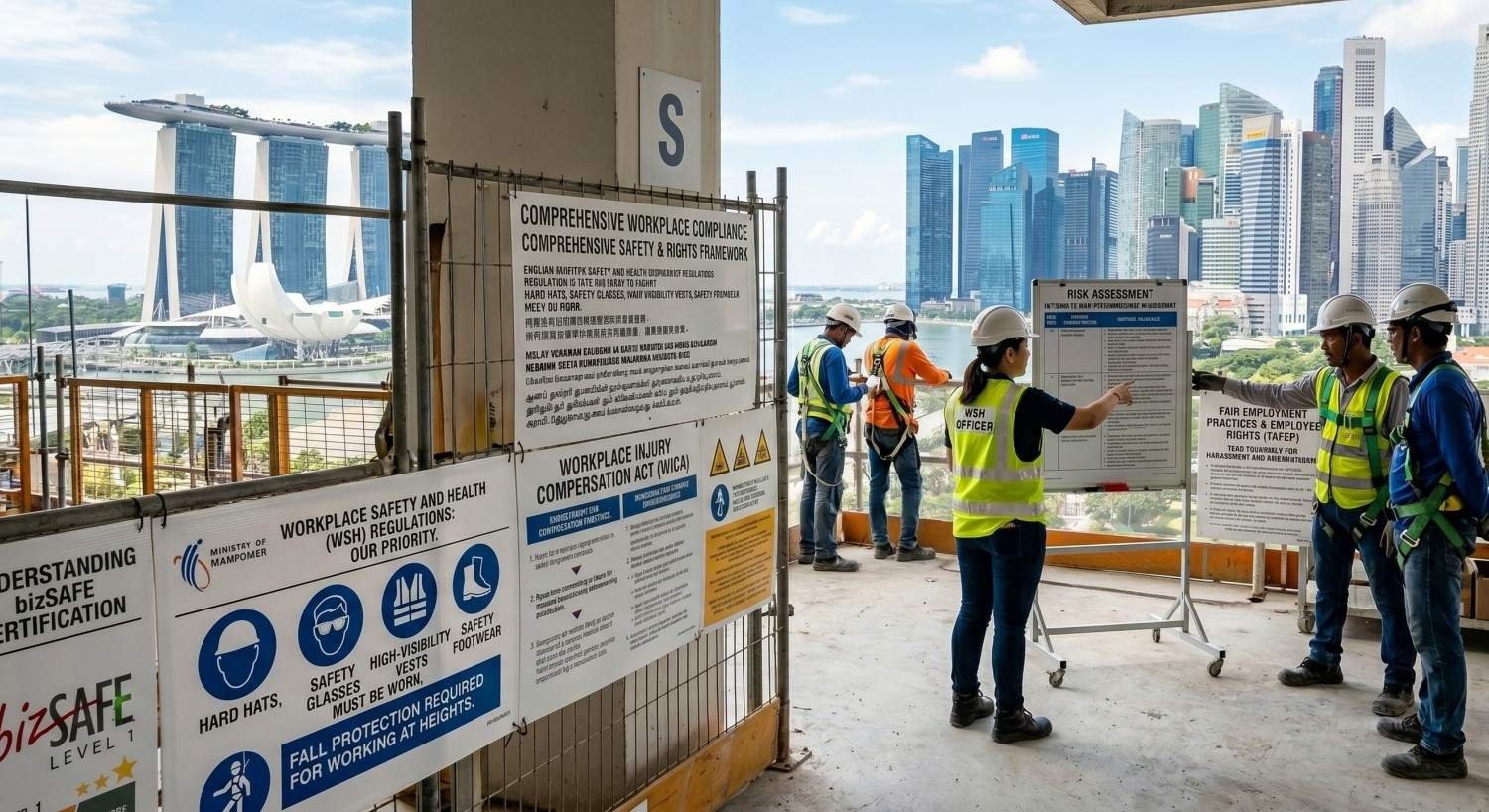
In addition to physical safety measures, Singapore’s WSH regulations also highlight the rights of employees, their well-being, and fair treatment.
Prevention of Workplace Harassment and Discrimination
Singapore encourages employers to foster good practices in the workplace that are respectful, inclusive, and free from harassment and discrimination. Some examples of employee misconduct are:
- Bullying or verbal abuse
- Discrimination based on gender, race, religion, age, or national origin.
- Abusive workplace policies or practices
Organizations are encouraged to have clear grievance procedures in place for employees to safely report concerns at work.
Workplace Injury Compensation
Under the Work Injury Compensation Act (WICA), employees with work-related injuries might be covered. This framework provides employees’ compensation for:
- Medical expenses
- Unemployment while recovering from a disease/injury, during the recovery period
- Impairment or disability that persists or continues indefinitely.
It is particularly crucial in sectors like construction, logistics, and manufacturing, which are prone to accidents.
Whistleblower Protection
Singapore’s legal system safeguards employees who report unsafe working conditions or workplace violations. Retaliation against whistleblowers can take the form of:
- Wrongful termination
- Denied promotions
- Workplace intimidation
- Unfair disciplinary action
By promoting a culture of reporting hazards and unethical behavior, companies can enhance their accountability and workplace safety and health practices.
Fair Employment and Employee Rights
Singapore also has a fair employment system in the workplace. Employers should conduct disciplinary procedures and terminations fairly, particularly when it comes to an unsafe working environment or health concerns.
There is no retaliation against employees with concerns about hazardous environments.
Understanding bizSAFE Certification
Organizations can also participate in the Workplace Safety and Health Council (WSHC)-supported capability building program known as bizSAFE, which is a nationally recognized program. It enables companies to build up their management systems in a gradual way via a step-by-step approach.
bizSAFE certification gives a business a way to show its dedication to safe working practices, decrease risk and make sure they’re in line with industry standards. Organizations can choose to pursue the bizSAFE certification in fields such as the construction, manufacturing, engineering, etc., sectors to enhance the safety measures and gain trust within the industry.
Implementing bizSAFE practices will lead to a reduction of work accidents, increased employee confidence and safer working conditions on all levels of operation within the organization.
Final Thought
To conclude, Singapore’s WSH laws aim to promote a safer, healthier and more productive workplace in all industries. Cooperation with seasoned professionals such as Greensafe International can further guide workplaces to manage regulatory requirements and create a robust safety culture.
Frequently Asked Questions (FAQs)
1. How is the Workplace Safety and Health Act defined in Singapore?
The Workplace Safety and Health Act (WSHA) is the primary piece of legislation in Singapore to ensure that workplace safety standards are met and the employer/employee responsibilities are discharged.
2. Why is it important for workplace safety to be a concern in businesses?
Workplace safety benefits include prevention of accidents, increased employee morale, increased productivity, and legal compliance.
3. Which industries do workplace safety regulations have the greatest impact on?
Some industries, such as construction, manufacturing, logistics, marine, and healthcare, have stricter safety regulations due to the safety risk of an incident occurring at their workplace.
4. If an organization does not adhere to safety guidelines, what might occur?
Organizations can be shut down, their reputation lost, be fined, and even face prosecution.
5. What are some examples of ways to improve compliance in the workplace?
Regular risk assessment, staff training, safety audits, and collaborating with experts can help to improve compliance.
