
Working at height is the most dangerous activity in construction, manufacturing, maintenance, telecom, logistics, and other sectors. With proper training and adherence to safety working practices, a fall can still occur. This is where a safety harness plays a vital role in protection. However, most safety harnesses cannot protect a worker if it is damaged, worn out, or improperly maintained.
Therefore, safety harness inspection cannot be overlooked or performed as a formality by every worker at the beginning of a task. It requires competent personnel who carry out visual inspections and other tests to assess the work equipment for use in accordance with regulatory requirements and the manufacturer’s guidelines.
This article clearly explains how to inspect a safety harness Singapore before working at height.
Why Safety Harness Inspection Matters
A safety harness is subjected to various factors such as dust, sunlight, chemicals, moisture, abrasion, and everyday wear and tear. These cause webbing to fray, stitching to fail, metal components to corrode, and ultimately compromise the fall-arresting capability of the harness.
A compromised harness can appear normal until the moment of use, when it may fail to withstand the force of a fall. That is why routine inspection of the harness is critical.
Routine inspections can help:
- Prevent potential equipment failure during a fall
- Detect potential damages at an early stage
- Increase a worker’s trust in the fall protection gear
- Maximize the gear’s longevity
- Minimize the number of incidents caused by faulty equipment
Before You Begin the Inspection
Do not inspect the harness in the dark or in a hurry, trying to get back to work
Instead, inspect a clean, dry, and well-lit area.
- Place the harness on the floor or hang it from the D-ring at the back of the harness.
- Remove any dirt or debris that could hide potential flaws.
- Always follow the manufacturer’s instructions for inspecting the specific model.
Many organizations have systems for recording and storing information about the inspection,
such as colour-coded tags or QR codes.
Step 1: Check Labels and Identification Tags
- Make sure that the label is present on the harness, not torn, not faded, and not covered with dirt.
- The label should include the following information: Manufacturer’s name, serial number, date of manufacture, harness model, details regarding the last inspection, expiry date or service life of the harness.
- If the label is missing or cannot be read, the harness cannot be used until the information on it can be restored.
- It is impossible to determine if the harness is safe and legal to use without the label.
Step 2: Inspect the Webbing Carefully
- The webbing is the most stressed part of the harness, so it must be carefully inspected.
- Slide every strap through your fingers and look at the webbing on both sides for flaws such as cuts, tears, fraying, broken fibres, abrasions, pulled threads, burns, chemical stains, melting or oil spots, paint, UV and brittle spots, mould or mildew, stiff or tacky areas.
- Always flex the webbing during inspection, as some flaws can only be seen when the webbing is bent.
Step 3: Examine Every Stitch
Stitching is equally important because it secures the structural load-bearing points of the harness.
Inspect every stitched section for:
- Broken stitches
- Loose threads
- Missing stitches
- Pulled stitching
- Uneven stitching
- Chemical damage
- Heat damage
- UV deterioration
- Discolouration around seams
Pay special attention to load-bearing stitching because these areas absorb significant force during a fall. Any damaged stitching is sufficient reason to remove the harness from service.
Step 4: Inspect D-Rings and Metal Hardware
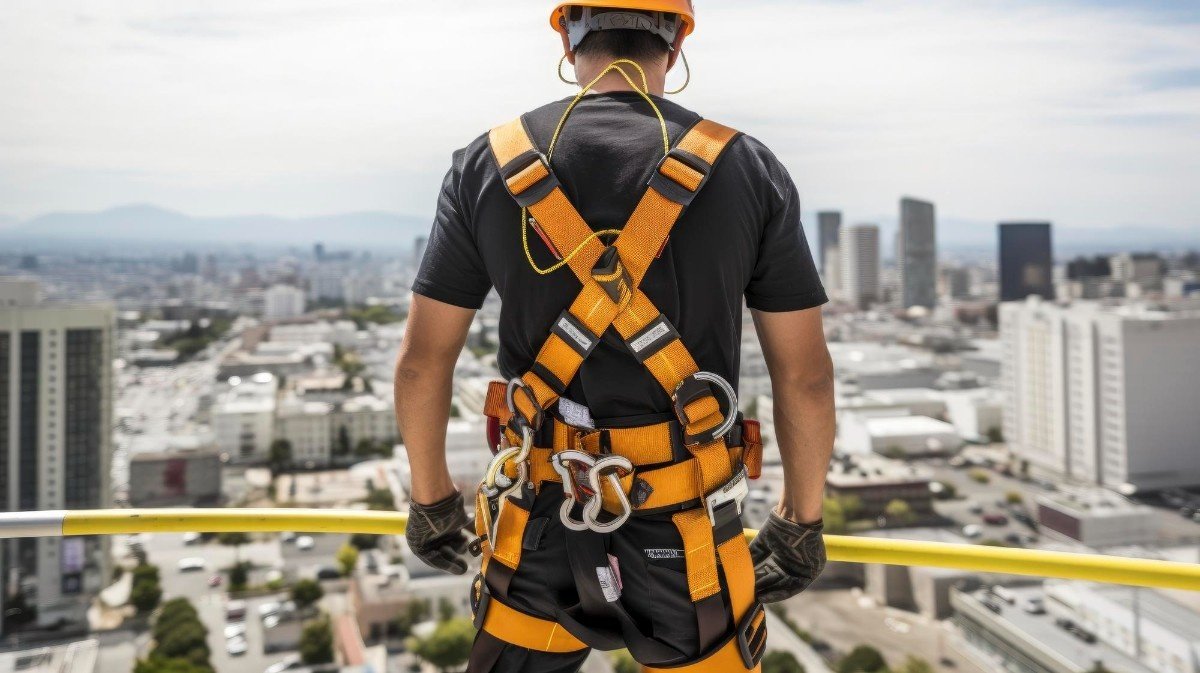
The fourth step to take is to inspect all metal parts. The parts to check include D-rings, buckles, rivets, grommets, adjusters, and connectors. The following defects should be looked for:
- Rust
- Corrosion
- Cracks
- Sharp edges
- Deformation
- Bending
- Pitting
- Loose rivets
- Chemical deposits
Each buckle should open and close smoothly and should not be stiff or slippery. In case of bent D-rings, cracked parts, or malfunctioning buckles, the harness should not be used.
Step 5: Test Buckles and Adjustment Points
The fifth step is to open and close all buckles to confirm that adjusters move smoothly.
The following should be checked:
- Slipping of adjustment straps
- Proper locking of buckles
- Recovery of elasticity
- Proper adjustment mechanisms
Failure of any of these may result in the inability to adjust the harness in case of a fall.
ALSO CHECK – Common Work At Height Hazards And How To Prevent Them
Step 6: Check for Contamination and Improper Cleaning
Even if damage is not obvious, harness materials can be compromised by contamination.
Inspect the following:
- Oil
- Grease
- Paint
- Glue or cement
- Solvents
- Chemical spills
- Heavy dirt buildup
- Debris embedded in material
Check for improper cleaning, such as the use of bleach, harsh chemicals, solvents, abrasive brushes, or hot machine washing.
The safest way to clean most harnesses is with mild soap and water and a soft brush or cloth.
Step 7: Inspect Lanyards and Connecting Components
In addition to the harness, a fall protection system includes other important components. These include shock-absorbing lanyards, energy-absorbing elements, snap hooks, carabiners, lifelines, and self-retracting lifelines (SRLs).
Check all these items for:
- Broken cords or other parts
- Damaged or frayed hooks
- Corrosion
- Deployed shock absorbers
- Cracks on any connecting hardware
- Improperly locked gates
- Damaged stitching
- Excessive wear
All parts of your fall arrest system must work correctly to protect you.
Step 8: Confirm the Harness Has Not Experienced a Fall
- Any harness that has been subjected to a fall, even if the fall was of a minor distance, must be removed from service immediately.
- Damage that is not apparent may occur, so visual inspection alone is not sufficient.
- Furthermore, fall protection equipment must not be used again except as recommended by the manufacturer for inspection and retesting.
Step 9: Verify Inspection Frequency
As important as the inspection is, it is no less important to have a schedule for conducting them.
An example of an inspection schedule is as follows:
| Inspection Type | Frequency | Who Performs It? |
| Pre-Use Inspection | Before every shift | The worker wearing the harness |
| Periodic Inspection | Every 6 to 12 months (or per local laws) | A certified “Competent Person” |
| Post-Incident | Immediately following any fall or drop | Safety Supervisor / Competent Person |
As per Singapore’s WSH (Workplace Safety and Health) Act and the MOM Approved Code of Practice for WSH, employers should inspect the fall protection equipment at prescribed intervals by a competent person.
They should also maintain records for each inspection: The date, the name of the inspector, the equipment inspected, the finding – whether it passed or failed, and the action taken.
Having this information on file is important to both regulatory agencies and to your overall work at height safety.
Step 10: Remove Unsafe Equipment Immediately
If any defect is found, do not attempt temporary repairs.
Instead:
- Tag the harness as “Do Not Use.”
- Remove it from service immediately.
- Report the defect to the supervisor.
- Replace the damaged fall protection equipment.
- Dispose of or repair it only if permitted by the manufacturer.
Never compromise worker safety by continuing to use questionable equipment.
Final Thought
To conclude, a thorough harness inspection is one of the simplest yet most effective ways to prevent serious injuries and fatalities when working at height. Never ignore signs of wear, never use damaged equipment, and always follow manufacturer recommendations alongside workplace safety regulations. Consistent inspections not only improve compliance but also build a strong culture of work at height safety, ensuring every worker returns home safely at the end of the day.
Frequently Asked Questions (FAQs)
- How often should a safety harness be inspected?
Any safety harness should be inspected before use and at the recommended intervals after use by a competent person. - What should I check during a safety harness inspection?
The inspection should include checking the webbing, stitching, hardware, labels, buckles, and connectors for defects. - Can I use a safety harness after it has stopped a fall?
No, a safety harness is not safe for further use after experiencing a fall arrest. - How should a safety harness be stored?
It should be kept in a clean and dry space, especially away from direct sunlight, moisture, chemicals, and other harmful substances. - Why is safety harness inspection important?
The organization is expected to take action to address the issues before the next audit takes place.
