
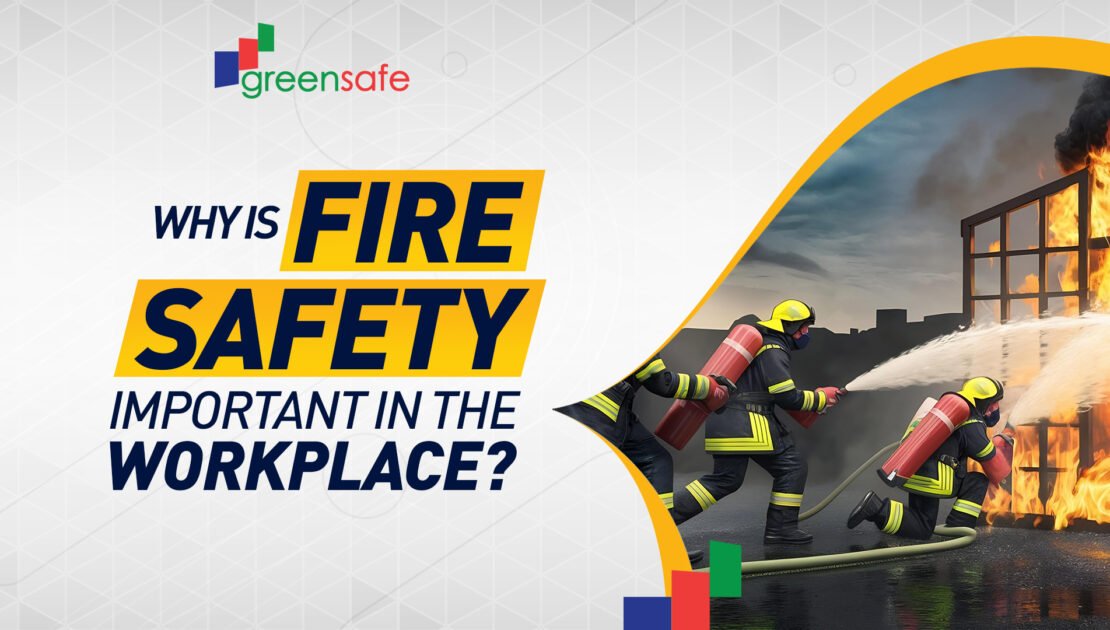
Fire may occur in any location: a short circuit in the pantry of an office, a chemical release in a warehouse, or an overloaded power board in a server room. What appears to be a small incident can turn into a life-threatening emergency in a few seconds.
However, the issue of fire safety is one of the least rated elements of workplace management. Understanding why fire safety matters and what you can do about it is not just a regulatory checkbox. It is a responsibility every employer and employee shares, especially when they are expected to respond to fire incident in workplace situations quickly and effectively.
The Real Cost of Workplace Fires
Every year, workplace fires result in severe damage to lives, injuries, and property. In addition to the immediate physical threat, a fire can erase the years of work and equipment, inventory, data, and other non-replaceable assets can disappear within minutes. Unprepared businesses tend to have a hard time recuperating, and many simply have to close permanently in the aftermath.
For employees, the effects may be worse still. The physical and psychological impact of a fire incident can be long-term due to burns, smoke inhalation, and trauma.
Common Causes of Workplace Fires
Understanding the causes of fires is the first step towards preventing them. Common causes (triggers) of fires encountered on sites are:
- Electrical Faults: Faulty wiring, overloaded sockets, and dilapidated equipment.
- Flammable Materials: Chemical spills, or paper and fuel stored incorrectly.
- Human Error: Leaving heat-producing appliances unattended or mishandling open flames.
- Kitchen and Pantry Accidents: Leaving appliances unattended when cooking.
- Arson: Intentional fires set in high-risk or unmonitored locations.
Through careful planning, awareness, and training, all of these fire hazards can be mitigated. Therefore, incorporating fire safety training into the daily workplace culture is essential.
Why Workplace Fire Risk Assessment is Non-Negotiable
Workplace fire risk assessment forms the basis of any good fire safety plan. It includes the systematic recognition of fire risks, the assessment of who might be put at risk, and the establishment of a mechanism to eradicate or mitigate the risks. In its absence, organizations are blindly operating without knowing about the threats that can be lurking within their premises.
A fire risk assessment in the workplace serves as both a recommended practice and a legal requirement in most jurisdictions, including Singapore, under workplace safety and fire safety regulations. The assessment requires periodic reviews to identify new dangers that may emerge from equipment updates, building modifications, and changes to work procedures. The complete evaluation process will enable organizations to determine which fire suppression systems, evacuation signage, and emergency equipment require their most urgent investment.
The Importance of Preparedness: Training Your People
Fire extinguishers and sprinkler systems require installation to protect people, although these systems need human presence to function effectively. The human element stands as the fundamental requirement for survival.
Emergency Response Teams need to learn about emergency response procedures that will keep them safe during fire emergencies, which must be taught to all employees. Fire-related incidents lead to injuries because people panic and become confused. The main cause of injuries during fire incidents results from people making poor evacuation choices instead of being harmed by the actual fire.
Introducing the WSQ Respond to Fire Incident in Workplace (RFIW) Course
Greensafe International’s WSQ Respond to Fire Incident in Workplace (RFIW) course is one of the most feasible and all-inclusive courses recommended to organizations in Singapore interested in creating a truly fire-ready workforce. The course is aimed at giving learners practical knowledge and skills to manage a fire emergency without panic.
This course covers three areas:
- Legislation and CERT Mobilization: Knowledge of the legal system regarding emergency response teams and roles.
- Fire Hazards and Fire Protection Systems: Awareness of typical fire hazards, fire suppression, and detection systems in buildings.
- Basic Methods of Fighting Fire: Understanding how to use fire extinguishers and other extinguishing media to respond to small, controllable fires.
Students who successfully finish the course will be given a Statement of Attainment (SOA) by SkillsFuture Singapore (SSG), a nationally recognized qualification that certifies their skills. The course also accrues 10 CPD points, making it useful for professional development.
Final Thought
To conclude, fire safety is not a one-time effort – it is an ongoing commitment. Proper training, including a fire safety course (WSQ RFIW), is a way of ensuring that your organization complies with regulatory requirements, limits liability, and creates a culture where safety is the norm.
Waiting until a fire incident reveals the lapses in your fire preparedness is not a good idea. Train your staff, inspect your fire safety measures, and turn your work environment into a safer place to be, because when it comes to fire, being prepared is all.
